
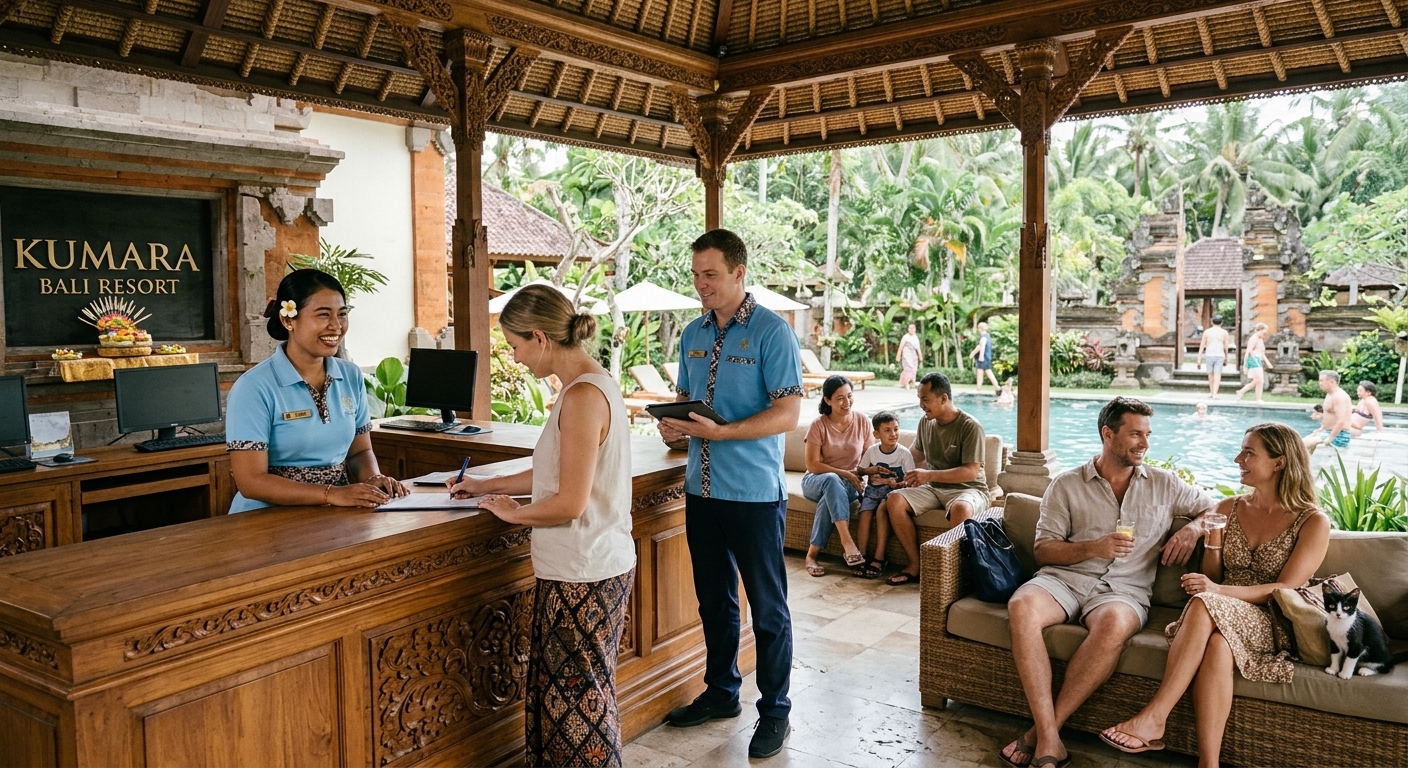
blog.pandaraprima.co.id - Oh, there's exciting news from the Island of the Gods that tourism industry players absolutely must pay attention to. Bali's Governor, Mr. Wayan Koster, is getting serious and serious about defending local products. He's already prepared to issue harsh administrative sanctions for hotels, restaurants, and cafes found refusing to utilize local produce.
This step was taken to ensure Bali's economy doesn't just revolve around big businesses, but also benefits local farmers, fishermen, and artisans. So, accommodation managers, it's better to carefully consider the regulations than have their permits subject to a complete review!
- The Bali Provincial Government's Firmness in Protecting Local Businesses
- Bali's Super Abundant Tourism Market Potential
- List of Bali's Original Superior Commodities
- Positive Impact on the Economy and Regional Independence
- Real Steps for Tourism Businesses to Shift to Local Supply Chains
- Conclusions and Hopes for the Future of Bali Tourism
This decisive action was deliberately taken because many accommodation businesses still appear to be indifferent to Bali's local potential. Yet, in terms of quality, Balinese raw materials are on par with imported goods. To deter them and encourage more discipline, several levels of sanctions have been prepared, gradually:
Business managers who are found to be stubborn will not have their operations immediately closed, but will be sent warning letters (SP1, SP2, up to SP3) in stages as an official warning.
If you've been warned three times but still stubbornly refuse to accept local materials, be prepared for your business permit to be reviewed by the local government.
These regulations aren't actually new. All of these regulations are clearly outlined in Governor's Regulation (Pergub) Number 99 of 2018 concerning the Marketing and Utilization of Agricultural, Fishery, and Local Industrial Products in Bali. However, in practice, it turns out that many parties still lack full compliance.
Bali truly has an extraordinary magnetism that draws millions of visitors each year. This fantastic number of visitors should be a golden opportunity to maximize local commodity sales. The number of tourists visiting the Island of a Thousand Temples is truly unstoppable:
It was recorded that in 2025, the number of foreign tourists visiting Bali reached a fantastic 7,050,000 people!
Meanwhile, the movement of local tourists is no less lively, reaching a total of around 9.3 million people. All told, there are approximately 16.3 million people per year who need food and drink in Bali, not including the local population!
Actually, Bali has an abundant supply of super quality products, for example:
According to official data from the Central Statistics Agency (BPS), approximately 66 percent of Bali's economy is directly driven by the tourism sector. Therefore, if the tourism sector were to buy local products, the impact would be significant for the welfare of the wider community.
Mr. Koster truly wants to implement Bung Karno's Trisakti teachings, particularly regarding economic self-sufficiency and cultural identity. Bali wants to free itself from dependence on imported materials for goods that can actually be produced locally.
It's not just the culinary and food sectors that need improvement; the development of tourism facilities such as hotels, villas, and supporting facilities must also pay attention to the quality of foundations and building durability for long-term safety.
In matters of infrastructure planning and land development for solid tourism buildings, many developers entrust the execution of their projects to professional construction specialists such as https://pandaraprima.com/which is always ready to provide quality pile driving services to support the safety of your dream building.
So that you don't get a warning, let alone a love letter in the form of an SP1 from the local government, hotel, restaurant and cafe managers must start formulating strategies. adjustments from Now. Switching to a local supply chain isn't as difficult as it seems if you take the right steps.
Accommodation entrepreneurs can start opening direct communication channels without going through too many intermediaries to get reasonable prices and a consistent supply.
Make a regular supply agreement with a cooperative or local farmer group to ensure a steady supply of fresh ingredients every day.
The hotel can provide guidance or brief education to local farmers regarding hygiene standards and food ingredient sorting that meet international kitchen criteria.
It is hoped that these strict policies will foster closer collaboration between the tourism industry and local MSMEs. Bali's tourism sector is not merely a grand display; it also has a tangible impact that can be felt directly by all levels of Balinese society, from upstream to downstream.
For hotel and restaurant owners, it's time to move on from imported ingredients and start proudly using local Balinese produce for the sake of shared economic progress and sustainability!