
pandaraprima.com - Oh dear, Bali is not doing well! This aesthetic Island of the Gods is facing serious issues regarding spatial planning, regional assets, and permits that are causing a headache. The Special Committee for Spatial Planning, Regional Assets, and Permits (Pansus TRAP) of the Bali Provincial DPRD has finally stepped in and demanded stricter law enforcement, the formation of a special task force, and requested that new tourism permits in the already congested area be halted.
This super important recommendation was delivered directly by the Chairperson of the Special Committee for TRAP of the Bali DPRD, Dr. (c) I Made Supartha, S.H., M.H., during the 54th Plenary Session (Internal) of Session Period I of the 2026–2027 Session Year on Monday (26/10/2026) at the Bali Provincial DPRD Building. This report is the result of their movements during six months of supervision, from April 6 to October 6, 2026.
Spatial planning and licensing oversight shouldn't just stop at mere discourse or piles of formal documents. After discovering various anomalies and crucial issues in the field, the TRAP Special Committee formulated systematic handling steps to provide the Bali Provincial Government with concrete and measurable guidelines. To make it easier to read, here are the seven strategies formulated by the TRAP Special Committee for submission to the regional government:
1. Accelerate the Resolution of Findings
The relevant OPDs are required to act quickly to resolve all field findings and submit regular reports to the Bali DPRD.
2. Establish the Bali TRAP Task Force
Create a dedicated cross-sector team to continuously monitor spatial planning, assets, and permits.
3. Organize Regional Assets
Revalidate all land and building assets belonging to the Bali Provincial Government whose legality is unclear or controlled by third parties.
4. Maximize Objective Oversight
Take advantage of public complaints and social media for early detection, but it is still mandatory to verify the law so that you don't just rely on "no viral, no justice".
5. Review Economic Disincentives
Create proportionate financial sanctions to provide a deterrent effect to rogue entrepreneurs.
6. Set a priority scale for handling
Order case handling based on environmental risk and citizen safety levels.
7. Moratorium on New Tourism Permits
Temporarily suspend the issuance of commercial tourism permits in areas already affected.overtourism.
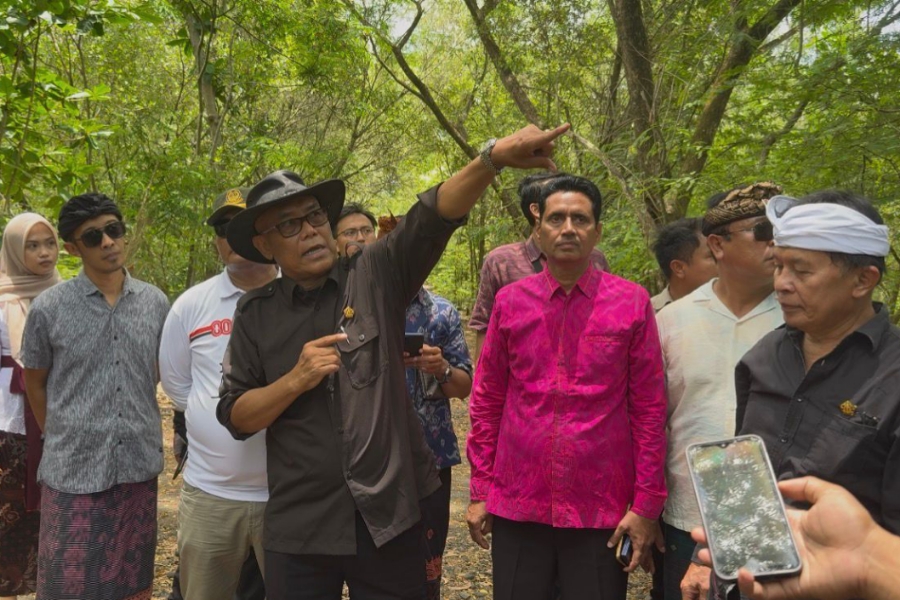
The TRAP Special Committee explained that development oversight should not be limited to reviewing documents on a desk. Over the past six months, they have undertaken 31 activities, including 17 coordination meetings and 14 unannounced field inspections.
Much support has poured in from the public, academics, and international organizations. However, the Special Committee emphasized that the measure of success isn't the amount of buzz on social media, but rather the government's courage to take firm action against violations, demolish illegal structures, and restore damaged environmental functions.
To prevent these regulatory measures from being perceived as selective or merely bluffing, all of the TRAP Special Committee's actions and demands are based on a strong regulatory foundation. Enforcing spatial planning law requires a clear legal framework from the central to regional levels to ensure the power to enforce any violations without loopholes.
The recommendations issued by the TRAP Special Committee refer to the national and regional legislative framework, including:
All these regulations are focused on maintaining the harmony of Bali's nature in accordance with the grand vision.Nangun Sat Kerthi Loka Bali.
The focus has also been on the construction of villas and hotels along riverbanks, which damage water catchment areas and trigger flooding. As a solution, the Special Committee proposed the Nuluh Tukad program, an integrated river search program to detect riverbank violations, as stipulated in PUPR Ministerial Regulation No. 28/PRT/M/2015.
In addition, the Special Committee proposed a study economic disincentives for violators of spatial planning. However, it was emphasized that this regulation is not a means for unscrupulous business owners to "buy permits." If the law requires demolition, then enforcement must proceed.
Baca juga: Bali’s Primary Property Market Is Rising, Here’s the Reason Behind Increasing Property Prices
The Bali Provincial Government is being encouraged to conduct a geospatial-based asset inventory to prevent illegal appropriation of state assets by third parties. Furthermore, a moratorium on commercial tourism permits in saturated areas is essential for higher-quality, environmentally friendly tourism growth and the protection of local businesses.
The submission of this final report marks the end of the TRAP Special Committee's term. The key is now in the hands of local governments to implement these recommendations to create a healthy investment climate based on sound principles.Tri Hita Karana.
Curious to learn more about the latest laws, spatial planning regulations, and trusted property and business analysis in Bali? You can read complete reviews and other interesting guides directly on the official website. Pandara Prima.